








Is Your Cat Entering Their Golden Years? 8 Ways to Support a Senior Cat
One day they are launching themselves onto the highest shelf in the house. The next, they pause before jumping onto the couch and look at you as though they have simply decided the floor is more sophisticated.
Cats rarely announce that they are getting older. The changes are often quiet: a little more sleeping, less jumping, slower grooming or a sudden preference for warmer, softer places.
Cats are generally considered senior from around 10 years of age, although ageing happens differently for every cat. Health history, genetics, weight, lifestyle and nutrition can all influence how an individual cat ages.
Growing older does not mean your cat cannot continue enjoying a happy, comfortable and wonderfully opinionated life. A few thoughtful changes to their routine can help support them through their golden years.
1. Learn to recognise the quiet signs of ageing
Cats are extremely good at hiding discomfort. What looks like laziness, stubbornness or a new personality quirk may sometimes be a sign that something has changed.
Watch for:
- Hesitation before jumping
- Sleeping more than usual
- Reduced grooming
- A dull, greasy or matted coat
- Changes in appetite or weight
- Increased thirst or urination
- Accidents outside the litter tray
- Becoming more vocal at night
- Confusion or changes in familiar routines
- Less interest in playing or interacting
Changes in thirst, urination, appetite, body weight or behaviour should be discussed with your veterinarian rather than dismissed as normal ageing. Routine examinations and testing may detect some age-related conditions before obvious symptoms develop.
2. Book regular senior health checks
Even a cat who appears perfectly healthy can benefit from more frequent veterinary care as they age.
Veterinary guidelines recommend that senior cats receive a health examination at least every six months, with more frequent visits for cats living with chronic conditions. A senior assessment may include checks of your cat’s weight, teeth, joints, heart, thyroid, abdomen, blood pressure and overall body condition.
Bring up even small changes during the appointment. You know your cat’s normal behaviour better than anyone.
3. Make their favourite places easier to reach
Your cat may still want to sleep on the couch, supervise you from the bed and stare judgmentally through the window. They may simply need a little help getting there.
Try adding:
- Pet steps or a small ramp near the couch or bed
- Low, stable stools between the floor and favourite surfaces
- Non-slip rugs on smooth flooring
- A low-entry litter tray
- Food and water stations on the same level
- Soft beds in warm, quiet locations
Keep essential resources easy to access. A cat experiencing stiffness should not need to climb stairs every time they want food, water or the litter tray.
4. Keep them moving without forcing them
Senior cats still benefit from gentle movement and mental stimulation.
Short play sessions are often more appealing than one long, energetic game. Try slowly moving a wand toy along the floor, rolling a lightweight ball nearby or hiding treats in easy-to-reach locations.
Allow your cat to set the pace. The goal is not to recreate kitten-level chaos. It is to encourage comfortable movement, curiosity and engagement.
Speak with your veterinarian if your cat stops jumping, walks differently, has difficulty standing or reacts when being touched.
5. Pay attention to nutrition and body weight
There is no single diet that is perfect for every senior cat.
Some older cats become less active and gain weight. Others lose weight or muscle despite eating normally. Your cat’s nutrition should be reviewed according to their body condition, activity level, health history and any diagnosed conditions.
Veterinary nutrition guidelines recommend an individualised approach rather than assuming every older pet needs the same diet.
6. Support hydration and urinary wellbeing
Cats are not always enthusiastic drinkers, and hydration can become especially important as they grow older.
You can encourage water intake by:
- Offering multiple water bowls around the home
- Keeping water away from the litter tray
- Trying a pet drinking fountain
- Refreshing bowls daily
- Using wide bowls that do not press against the whiskers
- Including wet food when appropriate for your cat
Contact your veterinarian promptly if your cat is straining to urinate, repeatedly entering the litter tray, producing very little urine, crying while urinating or passing blood. Urinary problems should not be treated with supplements alone.
7. Keep their brain engaged
Older cats may benefit from predictable routines and gentle enrichment.
Try:
- Rotating familiar toys
- Offering simple food puzzles
- Creating a comfortable window-viewing area
- Using cardboard boxes and paper bags for exploration
- Practising easy reward-based activities
- Maintaining consistent feeding and sleeping routines
Age-related cognitive changes can include disorientation, altered sleep patterns, increased vocalisation, forgetting familiar routines or changes in social interaction. These signs can overlap with other health conditions, so a veterinary assessment is important.
8. Build a simple daily wellness routine
Cats tend to appreciate consistency, especially when the routine involves something tasty.
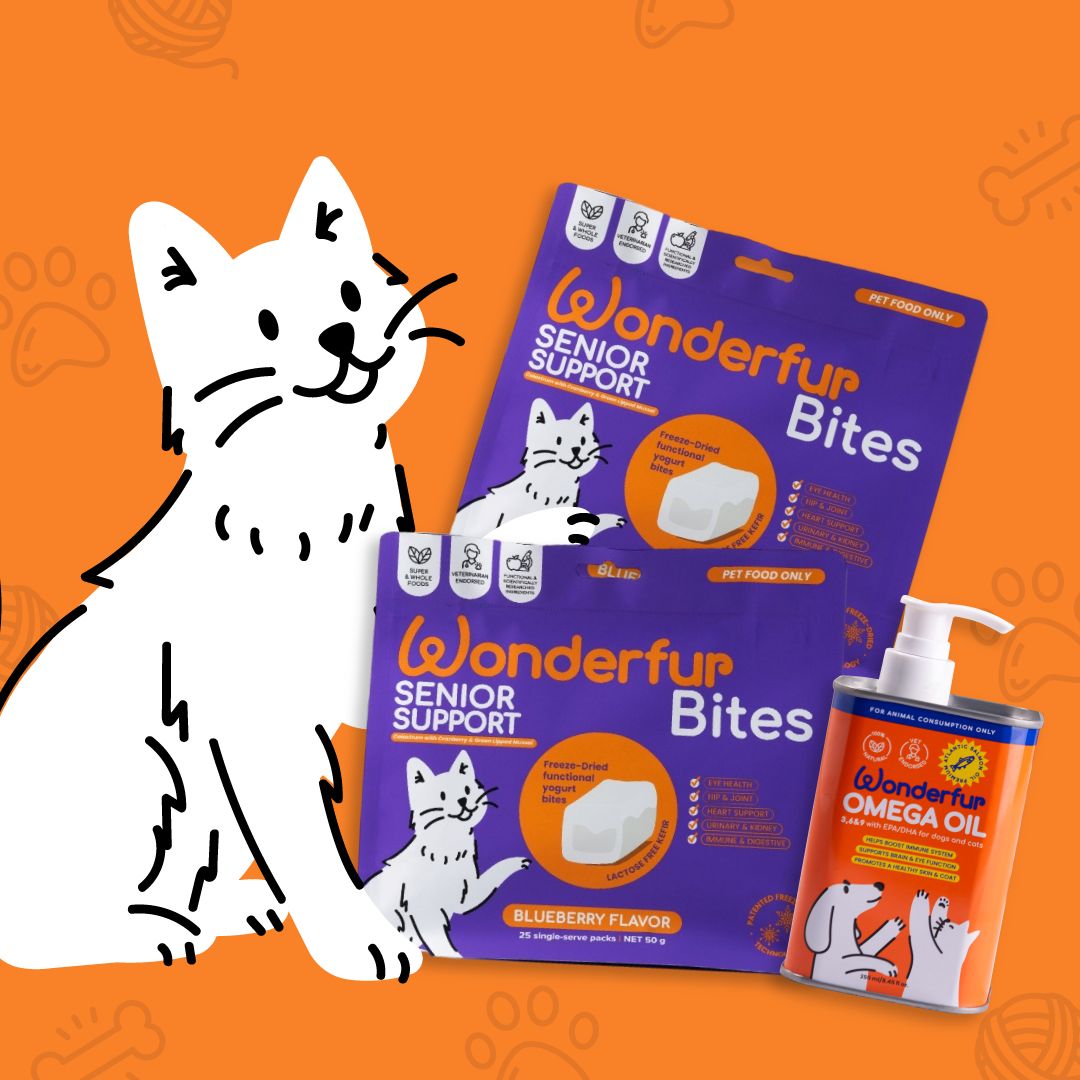
Wonderfur Bites Senior Support for Cats are freeze-dried functional bites created to make everyday nutritional support simple for ageing cats.
The formula combines lactose-free probiotic kefir with cranberry, blueberry flavour, colostrum powder, green-lipped mussel, vitamin E, taurine and medium-chain triglycerides. It is designed to support areas that become increasingly important as cats age, including digestion, immunity, eye health, joint mobility, brain function and urinary wellbeing.
Each bite can be:
- Offered directly as a treat
- Broken into smaller pieces
- Crumbled over your cat’s regular food
- Used as part of a consistent daily routine
This can be particularly helpful for cats who immediately become suspicious when they see a tablet.
Daily serving guide
- Cats up to 5kg: 1 bite daily
- Cats from 5kg to 10kg: 2 bites daily
- Cats over 10kg: 3 bites daily
Each bag contains 25 individually portioned bite
Introduce any new food or supplement gradually. Speak with your veterinarian before use if your cat has a diagnosed health condition, follows a prescription diet, takes medication or has known food sensitivities.
Growing older is still wonderfully feline
Your senior cat may sleep longer, jump a little lower and demand increasingly specific sleeping arrangements.
But they are still the same cat who knows exactly when dinner should be served, which chair belongs to them and how to occupy the precise section of your laptop that you need.
Regular veterinary care, thoughtful nutrition, gentle movement, hydration and a comfortable home environment can all help support their quality of life.
Because getting older should still include sunny windows, soft blankets, happy purrs and many more years of ruling the household.
At what age is a cat considered senior?
Cats are commonly considered senior after approximately 10 years of age, although ageing varies between individual cats.
How often should a senior cat visit the vet?
Senior cats should generally receive a veterinary examination at least every six months. Cats with ongoing health conditions may require more frequent monitoring.
What are common signs of ageing in cats?
Signs may include reduced jumping, increased sleeping, weight changes, altered grooming, changes in thirst or urination, night-time vocalisation and changes in litter tray habits. These signs should be discussed with a veterinarian because they may also indicate an underlying health concern.
Are supplements suitable for senior cats?
A supplement may be used alongside a complete and balanced diet to provide additional nutritional support. Suitability depends on the cat’s health, diet and medications, so owners of cats with diagnosed conditions should consult their veterinarian.